 Sign in with Steam
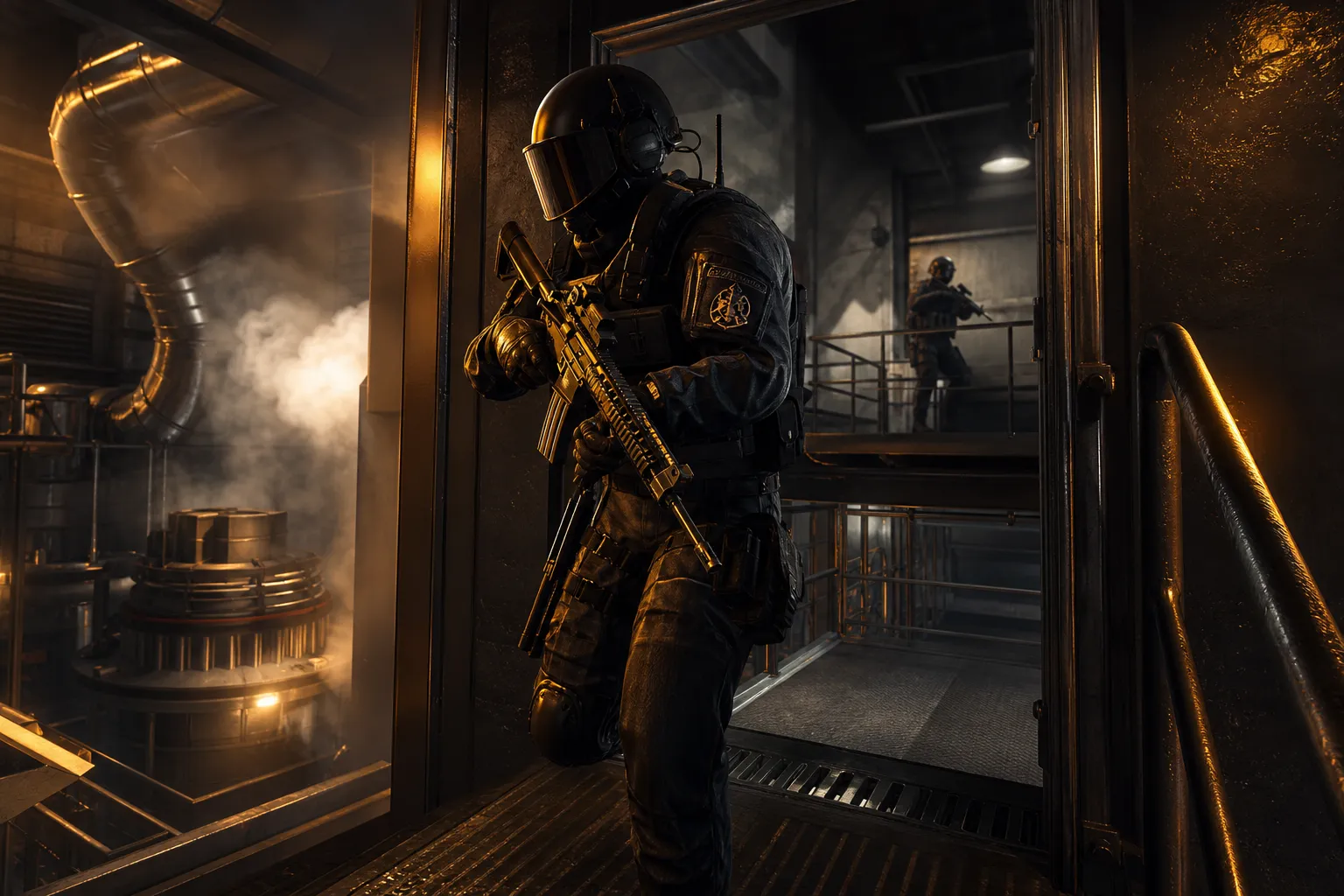
There’s a very specific kind of pain that only Nuke gives you: you hear the bomb go down on A, you call the rotate, and then someone takes the vent, someone else walks Ivy, and suddenly your “fast” reaction is a 12-second funeral procession. Nuke doesn’t just punish bad reads. It punishes lazy rotations — the kind where you move because the round feels like you should, not because you’ve actually counted bodies, utility, and timing.
That’s why the map keeps producing ugly scorelines and even uglier calls at every level, from Premier grinds to Major playoffs. On Mirage you can sometimes get away with a sloppy stack. On Inferno, a late B rotation can still show up if your anchors stall for five seconds and live. On Nuke? One lazy step and you’ve handed over hut, mini, heaven, and basically your dignity.
Nuke makes every rotation a math problem
The whole map is built around punishment. Verticality, tight choke points, and the fact that CTs need to cover both floors means your rotation isn’t just “move from A to B.” It’s a route, a timing, and usually a gamble against a T side that’s already trying to force you into the wrong decision.
If you’re rotating late on Nuke, you’re not just late — you’re exposed in layers. Lower site to upper, ramp to heaven, vent to lobby, hut to main, secret to cross. Every route has a sound cue, a timing window, or a space where a lurk can catch you mid-transition. That’s the map’s whole personality.
And because CS2’s subtick still means fights are brutally honest in how they resolve, a bad rotation usually doesn’t get “saved” by some weird CS:GO-era jank. You crossed at the wrong moment? You’re dead. You threw your smoke after the contact? Too slow. Nuke has no sympathy for that stuff.
The map is stacked with timing traps
Take a standard outer setup. Let’s say one player is on yard, one is secret, one is mini, and your ramp anchor is waiting for pressure. If the hit comes late and your reaction is to rotate the yard player all the way down vents, you’ve probably already lost control of outside. T side can then split through mini and secret while your CTs are caught in transition.
That’s not bad luck. That’s a bad rotation.
- Vent drop is loud.
- Heaven rotates get spotted fast.
- Ramp to lower is a commitment, not a flex.
- Mini players can cut off half your map if you’re sloppy.
The map keeps asking the same question: did you rotate because you had info, or because you got nervous?
Lazy rotations on Nuke bleed map control
This is the part people miss. On Nuke, a rotation isn’t just manpower moving from one bombsite to another. It changes the entire shape of the round. Leave lobby too early and you give up upper pressure. Rotate heaven too greedily and a late yard player walks into mini for free. Pull your ramp guy off too soon and lower becomes a playground.
On most maps, a weak rotation costs space. On Nuke, it often costs space and vision and timing and utility. That’s why CTs who play Nuke well look almost annoying in how patient they are. They’re not sitting still — they’re waiting for proof.
Think about how elite teams use this. Vitality with ZywOo doesn’t just randomly flood rotations because someone heard footsteps. Spirit with donk has turned some rounds into absolute demolition jobs by punishing over-rotates before the defense can reset. And at the Major level, the difference between a clean Nuke defense and a collapsed one is often one guy moving 4 seconds too early.
The worst habit: rotating off a hunch
Everyone’s done it. You hear one smoke on outer and instantly your brain screams “it’s B.” Then you peel off hut, lobby, heaven — whatever your position is — and the T side just re-hit A with full utility while your team is split in half. That’s how Nuke farms confidence off your mistakes.
A better rotation on Nuke usually needs at least one of these:
- real contact on both floors,
- confirmed utility usage,
- audio from squeaky, ramp, or secret,
- a teammate staying alive long enough to justify the move.
Without that, you’re guessing. And guessing on Nuke is basically donating rounds.
Source 2 made the good rotations cleaner — and the bad ones look worse
CS2’s Source 2 upgrade didn’t invent Nuke’s problems, but it definitely made some of them easier to read. Subtick made peeks and counter-peeks feel sharper, which matters a ton on a map where a single heaven swing or hut burst can decide everything. If you rotate late and try to “make up” for it with a hero peek, good luck. The other team is probably already posted.
That’s why Nuke defenders need discipline more than heroics. A 3v3 on Nuke with 2 pieces of real info is infinitely better than a panicked 4-man collapse that leaves one route wide open. In Premier, that’s the difference between a clean 12-10 and one of those miserable 13-11 losses where everyone’s typing after the round like they were all baiting each other.
And yeah, economy matters too. If you force rotate every round and keep losing rifles, you’re not just losing the site — you’re wrecking the next two rounds as well. One bad CT decision can turn a decent 3,200-dollar loss bonus into a full eco spiral. Nuke punishes that harder than most maps because your positions are so specialized. Lose the right player in the wrong spot and the whole setup gets weird.
Why pros look so calm on Nuke
Watch enough Nuke from s1mple, m0NESY, or even old-school Nuke monsters and one thing stands out: they don’t overreact. They’re constantly micro-adjusting, sure, but they aren’t collapsing the whole defense just because a smoke landed outside. The best Nuke players make rotations look boring, which is exactly why they’re good.
At the Major level, that calm is huge. You’ll see teams hold ramp with one player, keep one near heaven, and let a lurk sit in lobby just to preserve info. It’s not passive. It’s controlled. There’s a big difference, and Nuke punishes anyone who confuses the two.
When a team does panic-rotate, it usually looks like this:
- someone leaves upper too early,
- the replacement arrives late and blind,
- the Ts cancel the hit and reset,
- now CTs are stuck between sites with utility gone.
That’s why Nuke produces some of the most frustrating rounds in CS2. You can play 20 seconds perfectly and then throw it all away with one lazy decision at the 21st.
What good Nuke rotations actually look like
Good rotations on Nuke are boring in the best way. They’re delayed just enough to confirm, fast enough to matter, and structured so that one player isn’t dragging the whole defense out of position. You hold a crossfire until the hit is real. You keep one anchor alive for late info. You use sound, not vibes.
Here’s the simple version:
- Hold until contact.
- Rotate with purpose, not panic.
- Keep one route open for a retake or re-hit.
- Don’t trade all your map presence for one possible save.
If you’re playing CT on Nuke and every missed footstep makes you sprint to the other site, you’re giving T sides exactly what they want: confusion, empty space, and a defense that keeps arriving 2 seconds too late.
The map rewards players who can sit on their hands a little. Not forever. Just long enough to know the hit is real. That tiny delay is often the whole round.
So yeah, Nuke punishes lazy rotations more than any other map because it turns impatience into a structural problem. You don’t just lose a bombsite — you lose the floor, the timing, the utility, and the next round’s economy. And if you still think rotating on vibes is fine, go defend upper on Nuke for ten rounds and tell me how that works out.