 Sign in with Steam
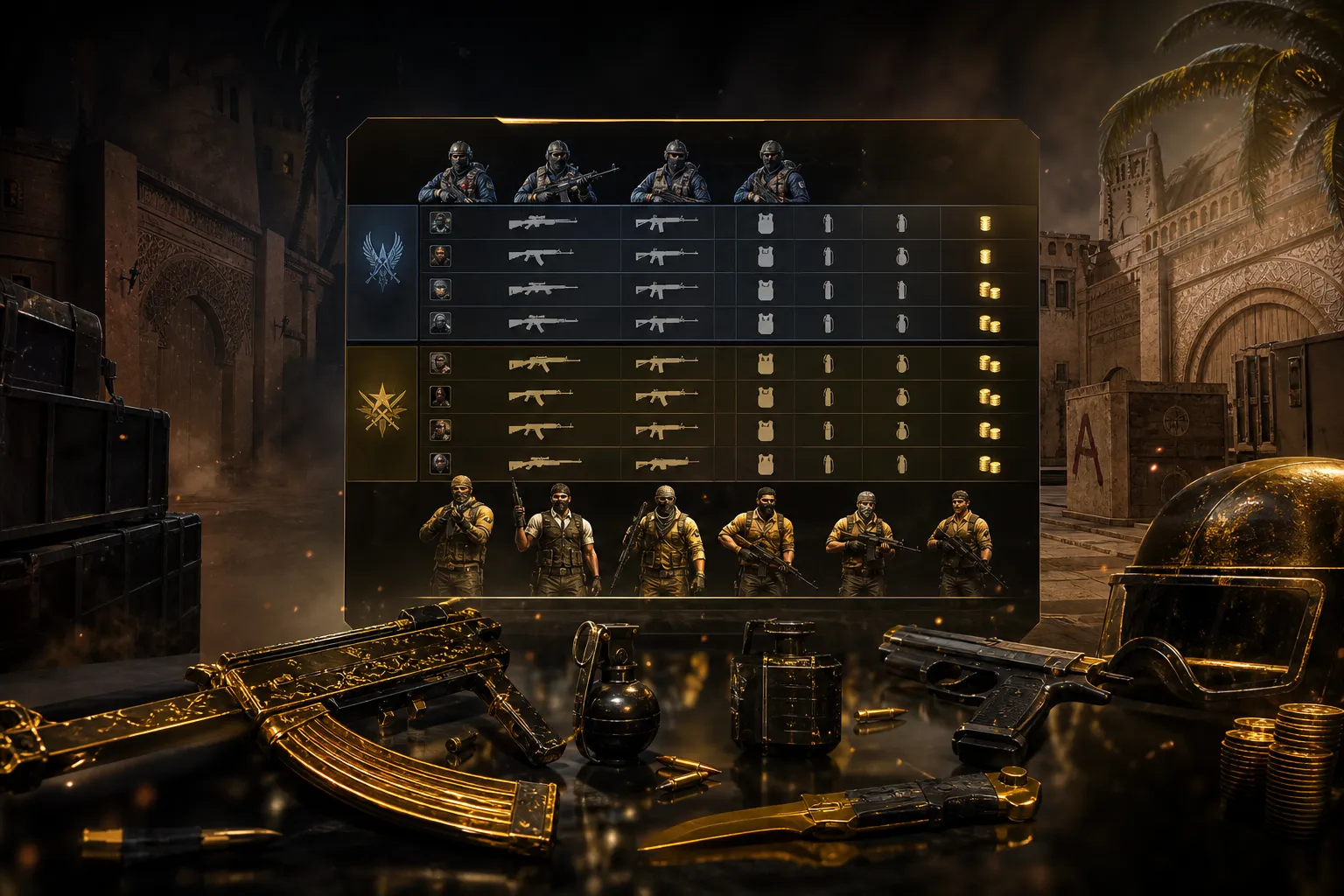
Round 13, your team’s on a clean CT side, and somebody says the cursed words: “Just force.” That’s usually where the half starts bleeding. Not because the idea is always wrong, but because most players don’t actually know where the real CS2 economy breakpoints are. They buy on vibes, lose on timing, and then act shocked when the next gun round turns into a pistol cosplay.
CS2 made this even messier. Source 2’s subtick system cleaned up a lot of weird input stuff, but it didn’t magically fix bad money decisions. If anything, tighter mechanics made economy mistakes stand out harder, because now one awkward buy can snowball into three dead rounds and a rating dent in Premier you’ll feel for the next hour.
The breakpoint nobody respects: when one rifle changes the whole half
The most ignored money point in CS2 is the one where your team can buy one real rifle, maybe a second if someone’s scrimped, and the rest are stuck on pistols or a half-arm. That’s not “a buy.” That’s a trap with extra steps. Too many teams force into that middle zone thinking they’re being proactive, but what they’re really doing is donating a round while still being poor for the next one.
On CT side, this hurts the most around the $2,000 to $3,500 range. You’ve got a kit on one guy, maybe a smoke, maybe an MP9 on one player who’s still pretending it’s 2021, and everyone else is hovering awkwardly. If you lose there, the opponent gets bonus money, your utility gets thin, and the next gun round starts with someone buying a Galil “for the team.” That’s not teamwork. That’s financial denial.
On T side, the breakpoint is a little different because a scrappy buy can still explode onto a site if the execute is clean. But if you’re buying into $1,900-ish and dropping your last 800 on a random AK when your team can’t flash into A Ramp on Vertigo or Split on Mirage, you’ve basically chosen poverty with a rifle attached.
Why people keep forcing half-buys like it’s 2018
Old CS habits die hard. Back in the CS:GO days, people got used to “winning ugly” with mixed buys and weird hero plays. CS2 kept that same energy, except now the economy punishments feel nastier because everyone’s playing faster, grenades are more important, and teams are way better at converting a damage advantage into a clean round. Watch any top level match from a Major and you’ll see it: the good teams don’t just buy when they can. They buy when the buy actually gives them a plan.
That’s why so many random Premier lobbies are stuck in an endless loop of bad forces. Someone thinks an MP9 and a dream can stop a B hit on Ancient. Another player drops an AK, one guy buys armor only, and suddenly you’ve got four players with different intentions and zero real utility. This is how you lose to a force-buy from the other side and then spend the next three rounds low on cash, low on nades, and low on patience.
Donk-style aggression made a lot of people think economy is optional. It isn’t. The reason those crazy pace teams work is because they know exactly when to go light and when to go all in. If your stack of random Faceit demons is buying Deagles every other round, that’s not the same thing. That’s just gambling with a headshot machine.
The magic number is often $4,750, not your ego
Here’s the number players should tattoo onto their brain: if your team can’t get close to a full buy, you’re usually better off saving and hitting the next round with around $4,750 per player plus whatever you kept alive. That’s the point where rifles, armor, and some real utility start to come together without the buy feeling fake. A proper T-side full buy isn’t just “AK and armor.” It’s AK, armor, flashes, smokes, maybe a molly, and a plan that doesn’t collapse the second someone on Inferno dies in apartments.
CT side gets even stricter because kits and utility matter more. If three players can only afford rifles and the rest are on MP9s or FAMASes with no nades, you’re not holding a proper setup — you’re hoping the enemy misplays. And in CS2, especially with how fast bombsites get swarmed, hope is not a strat.
A lot of the smartest teams treat these breakpoints like real thresholds, not suggestions:
- Under $2,000: don’t cosplay a buy. Save if the round is doomed.
- About $3,500: mixed territory. Decide if the round has a real plan or not.
- $4,750+: this is where a true rifle round starts to make sense.
- CT with a saved kit: priceless, honestly. Losing one defuse because someone skipped a kit is just bad CS.
Bonus rounds, loss bonus, and the part nobody tracks
The cleanest money advantage in CS2 isn’t some secret smoke lineup. It’s understanding loss bonus timing. Lose one, lose two, lose three — your economy doesn’t just go down, it changes shape. By the time the loss bonus climbs to the max, your team should be planning around it instead of reacting to it like a surprise patch note.
That’s why saving a gun on the right round matters so much. If you keep one AK alive as T, or one M4 on CT, you’re not just preserving a rifle. You’re keeping the next buy round from turning into a budget headache. One saved weapon can be the difference between a proper full buy and three players staring at the buy menu doing mental math like they’re on a tax return.
This is also where the old “just spend everything” mentality falls apart. If you’re 6-6 on Ancient and you dump all your money into a borderline buy, then lose, you’re suddenly walking into the deciding rounds with a couple of pistols and a prayer. The best Premier players don’t do that. They understand momentum is tied to cash, not just kills.
MR12 made economy mistakes way more expensive
MR12 changed the whole vibe of CS2. There are fewer rounds, which means every bad buy has more weight. In MR15, you could sometimes survive a dumb force because there was still time to recover. Now? One trash decision can basically decide the map. That’s why pro teams look so disciplined even when they’re bleeding rounds. They know a bad force on round 7 can wreck the rest of the half.
Look at how teams at the Copenhagen Major, or any elite event really, manage resets. You’ll see them save with intent, keep armor alive, and avoid those ugly middle buys unless the round situation is actually favorable. That’s not passive play. That’s good accounting. ZywOo teams and m0NESY-led attacks don’t win because they buy every round; they win because they rarely give the economy a chance to spiral.
And yes, the subtick era makes saving even more annoying to watch, because players can be so sharp with peeks and trades that you feel like you’re always one decision behind. That doesn’t mean you should force into it. It means you should be more disciplined, not less.
What a real buy round actually looks like
People love pretending economy is just “do we have rifles?” It’s way more annoying than that. A real buy round in CS2 is a package deal. If one piece is missing, the whole thing can get flaky fast.
Try checking these before you insta-lock a buy:
- Does everyone have armor?
- Do the CTs have at least one kit, preferably two?
- Can you still buy enough smokes and flashes for the execute or retake?
- Are you buying into a round where the opponent is likely on upgraded pistols or a bonus?
- Will losing this round leave you broke for the next two?
If the answer to that last one is yes, maybe don’t force the round just because your teammate is top fragging and feeling himself. A 24-kill game on Mirage doesn’t mean his buy decision is correct. Sometimes he’s just farming eco rounds and getting addicted to the feeling.
The best economy players I’ve seen — and yeah, it shows up in streams, scrims, and even the messy mess of Premier — treat money like map control. They don’t overextend it. They don’t donate it. They press when the round state says press, and they save when the game says breathe. That’s the difference between a team that looks organized and a stack that’s permanently one round away from collapse.
If you keep forcing into dead buys, your opponents aren’t outplaying you. You’re doing the hard part for them. So next time your team has $2,700 each and somebody types “buy??” in chat, ask the only real question: are we buying a round, or are we buying a mistake?