 Sign in with Steam
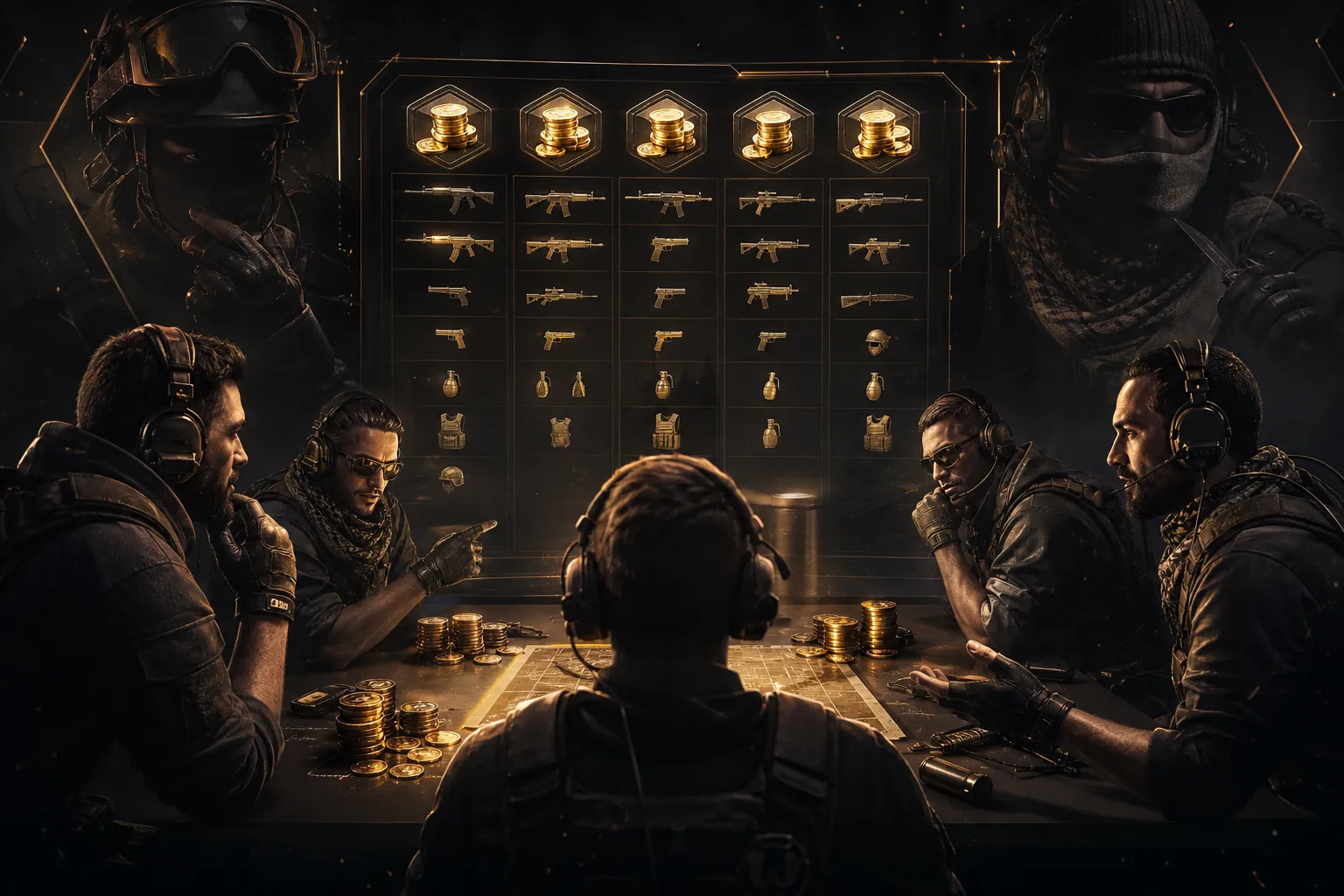
You know the round. You’re on 2,300 in the bank, your teammate has 1,950, the bomb’s down on B, and someone in voice is already yelling “force, we can catch them off guard.” That call wins you rounds sometimes. It also throws games away just as fast.
Saving vs force buying in CS2 isn’t about vibes, and it’s definitely not about whatever your duo with a Desert Eagle thinks is “EU style.” It’s math first, timing second, ego last. On Source 2, with subtick making first bullets and utility timing feel cleaner than old CS:GO ever did, bad economy decisions stand out even more because every round has sharper consequences. If you’re going to gamble, at least know the price.
The money rules the round, not your confidence
CS2 economy is still built around the same brutal idea: if you keep buying into bad rounds, you don’t just lose the current one, you starve the next two. A full loss bonus starts at $1,400 and climbs by $500 each consecutive loss, up to $3,400. That means the difference between saving and forcing can be the difference between a proper buy on round 4 or limping in with armor and a couple of pistols.
After a lost gun round, a team sitting around $2,000 to $2,400 per player is in that ugly middle zone. You can half-buy and pray, or you can save, stack the next round with rifles, and actually have a fight. That’s the whole argument right there.
Here’s the simple version I use when I’m calling in Premier or scrimming:
- Save when a full buy next round is more important than a miracle right now.
- Force when the enemy economy is fragile and a small upset swings the whole half.
- Half-buy only if your utility and armor can realistically take space.
- Don’t force just because one player has $5,000 and wants to keep his AK.
When saving is the clean call
Saving feels boring. That’s usually why bad teams hate it. But if your CT side on Mirage is already behind 1-2 and you’ve got two Galils, a scout, and no kit, forcing another weak buy is how you end up getting farmed by a simple A ramp exec. On Inferno, a bad force on CT can mean you’re defending banana with one smoke, one flash, and a rifle held together by hope. Good luck.
Save when:
- Your team can hit a real full buy next round with rifles, armor, and utility.
- You’re on a CT retake side and won’t realistically hold the map with scraps.
- The enemy has strong money and won’t be punished by your force.
- You’ve already burned your loss bonus and another loss would still leave you okay.
That last one matters more than people think. If you’re at $3,400 loss bonus already and your team is low enough to buy Deagles plus one flash, forcing might just delay the proper round by one buy cycle. A save keeps the plan intact. You’re not “giving up”; you’re choosing the round that matters more.
Pro teams do this all the time. Watch how disciplined teams at the Major level handle bad anti-ecos after a lost rifle round: they’ll sometimes float weapons back, preserve a rifle, and refuse the ego swing. ZywOo doesn’t need to dry-peek into a 5-stack with a MAC-10 because his side wants hero moments. The best teams understand that one saved AK on Ancient can be worth more than three desperate gunfights on B lane.
Force buying: when the math actually backs the chaos
Force buying gets spammed way too much in matchmaking, and yeah, sometimes in Premier too. But it’s not always stupid. There are times when a force is exactly what the round asks for, especially if the enemy’s economy is soft and you can break it with one ugly, ugly round.
Force when:
- The opponent just lost two close rounds and is sitting on mixed rifles and weak utility.
- You’re on T side and a cheap buy can still hit a fast hit with close-range power.
- You have enough to field upgraded pistols, armor, and a couple of flashes or smokes.
- Winning the round would wreck the other team’s money and change the half.
Take Anubis CT side, for example. If you lose a round and the enemy is barely floating across 2,500 to 3,000 per player, a force with armor, Deagles, maybe a FAMAS or two, and strong mid-to-B pressure can absolutely snowball. Same idea on Vertigo if the T side is cracked enough to abuse ramp timing. You’re not buying because “force is fun.” You’re buying because the opponent’s economy is shaky and you can stab it before it stabilizes.
The dirty secret? Force buys work best when your team understands actual win conditions. A five-Deagle force on T side Mirage with no plan is just a donation. A force with two flashes, a smoke, and a clear A split timing can steal a round from even disciplined CTs. There’s a reason donk can make chaos look like structure—he’s not just taking duels, he’s doing it in the right timing window so the enemy’s utility never gets to settle.
Round economy isn’t just your bank balance
People talk about money like it’s only the number in the buy menu. It’s not. It’s also enemy money, utility count, weapon retention, and how many rounds you can force the other side into ugly buys. If you save two rifles and one player keeps a kit, that changes the next buy by more than the raw cash value suggests.
On CS2’s subtick system, clean rifle rounds are even more valuable because the game rewards crisp first contact and proper utility timing. That doesn’t mean forces are dead. It means bad forces are even worse than before, because you can’t blame old tick jank when your team rushes through a smoke with no flash and gets deleted.
A few economy checkpoints I keep in my head:
- Full rifle buy: roughly $4,700 to $5,700 depending on rifle, armor, and utility.
- Deagle round: about $700 to $1,000 can still be dangerous if it’s coordinated.
- Hard save: if you can’t get to rifles plus utility next round, stop pretending.
- Bonus round: don’t throw away a won CT rifle because “we have momentum.” Momentum doesn’t stop a saved AK.
And yeah, the economy game is huge on pro broadcasts too. You’ll see teams at IEM Katowice or a Major sometimes preserve two rifles even while the round is lost, because that tiny decision keeps the next buy honest. That’s not cowardice. That’s discipline. Big difference.
How I’d call it on each side of the map
CT and T side aren’t the same, which is where a lot of players mess this up. A CT force on Nuke outside defense can be useful if you’ve got enough utility to contest outside timing. A T force on Dust2 can be a nightmare for the other team if you’ve got Deagles, armor, and a plan to abuse short or lower tunnels. Same money, different value.
My rough read:
- CT side: save more often, especially on maps with hard retake sites like Ancient B or Nuke A.
- T side: force more often if you can convert close-range fights and pressure weak rotates.
- Post-plant money: if you planted and have 2,400-ish each, a force might be justified because the bomb plant pads the economy.
On Mirage, a T force can work if you’re actually taking mid control and not just swinging Palace like it’s 2014. On Overpass, a CT force can be fine if you’ve got stackable anchors and a way to turn a single kill into a retake. On Train, if Valve ever wants to keep making economy decisions matter, the same rule applies: save when your buy won’t contest key map control, force when the enemy’s wallet is already wobbling.
The real tell: ask what round you’re buying for
That’s the question I wish more players asked before ripping into a force buy in round 2 or round 15. Are you buying for this round, or are you buying for the next two? Because if the answer is “next two,” then saving is probably the smarter play. If the answer is “we can break their economy and steal the half,” then force it — but only with a plan that actually fits the map, the side, and the money situation.
Too many teams in Premier lose games because three players want to save, one wants to hero buy, and one guy is already typing “we need money” while still sprinting into Mid with $550 in his pocket. Pick a lane. Either play the economy properly or keep donating rounds to people who do.
So next time your buy menu looks ugly and the scoreboard is tight, don’t ask “can we force?” Ask this instead: if we spend now, what round are we actually trying to win?