 Sign in with Steam
Train came back and, instantly, a bunch of sloppy habits got exposed. The teams that were happily farming Mirage mid or defaulting into A-site banana on Inferno suddenly looked lost when a map demanded actual lane pressure, proper spacing, and a real understanding of when to take space and when to just hold the damn angle.
That’s the thing with Train: it doesn’t care about your pretty execs if you can’t control Ivy, Popdog, or lower first. Source 2 didn’t magically make that less true. If anything, subtick made the punishment feel cleaner — one mistimed peek, one late smoke, one bad swing at 64-tick-accurate pacing, and you’re staring at a 4v5 before the round’s even settled.
Train punishes fake map control harder than most maps
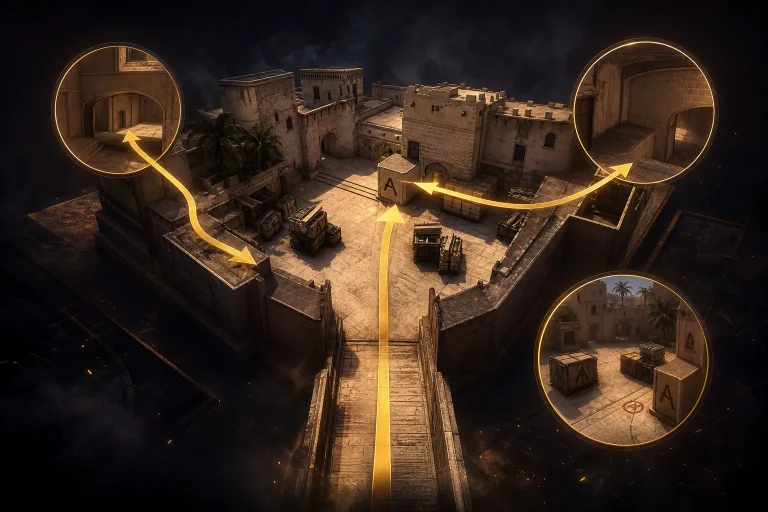
Old Train always had that personality. You couldn’t just set up three people outside A, throw a couple of smokes, and pray the other side overrotated like it’s 2017 pug Mirage. The map asks real questions: who owns Ivy, who’s stopping inner pressure, and who’s actually checking the weird off-angles near E-box and green train?
On most maps, teams can get away with soft control. Take mid on Mirage, keep banana on Inferno, maybe nibble outside on Nuke, and you’ve got options. Train is nastier. If you don’t claim a lane, the CT side gets to move first, and CTs moving first on Train is how your T side gets buried under a pile of utility and crossfires.
Real control here means something simple: cut off rotations, force defenders to show their cards, and make their AWP play uncomfortable. A static defense on Train is already annoying; a dynamic one with a player tucked on Ivy, another sliding between bomb trains, and a third ready to punish Popdog timings is miserable if your team is lazy.
The map rewards the boring stuff teams hate practicing
No one posts clips of “my anchor held pop smoke for 38 seconds” and gets 200k views, but that’s the actual win condition on Train. The map is built around pressure that looks boring until it wins the round. Smokes, flashes, late lurks, and disciplined spacing matter way more than hero plays.
In Premier, this matters even more because everyone thinks they’re donk for five seconds after a clean entry. Then they swing Ivy alone, get traded instantly, and blame the subtick system. No. You just had no spacing. Subtick isn’t the issue — your timing was.
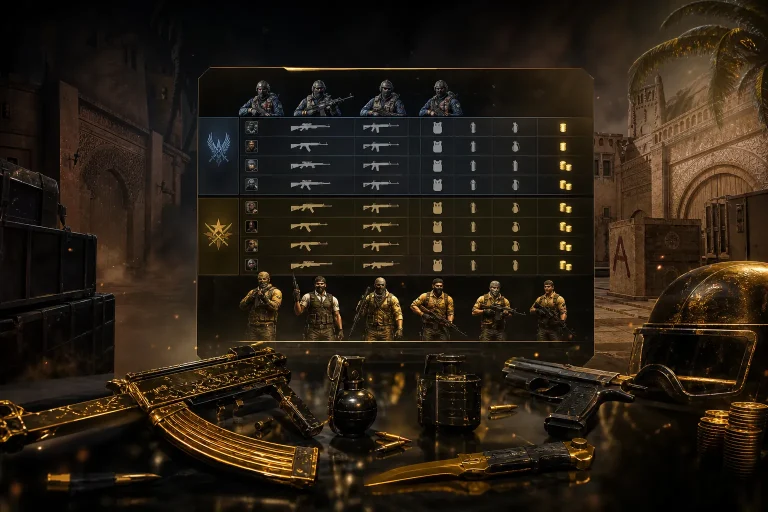
Train also makes the economy look more honest than the current force-buy clown fiesta on some other maps. A team that wins a first gun round and doesn’t immediately bleed $1,400 in dumb rebuys can keep a stable chain going. When you’re the T side and you’ve got $3,200 to $4,000 per player after a partial loss, you need a plan. Not vibes. A plan.
What real control looks like on Train
- Taking Ivy early with a flash that actually pops above the train roof.
- Getting one player into Popdog without giving away the timing for free.
- Forcing a CT smoke from inner so you know where their utility budget went.
- Holding connector pressure long enough that A rotators can’t cheat too far.
- Saving a flash for the re-hit instead of dumping everything in the first 12 seconds.
That list sounds basic because it is. The problem is most teams don’t do basic things with enough discipline to make them dangerous.
Why Train feels like a callback to better CS
Train’s return hits a nerve because it drags CS2 back toward maps that reward understanding instead of autopilot. We’ve spent enough time on maps where taking mid just means flashing over a wall and then hoping your teammates know how to convert. Train wants structure. It wants role clarity. It wants a lurk who doesn’t sprint into a smoke like they’re trying to clip farm for TikTok.
That’s why the map has always created clear tiers between teams. A squad like Vitality, with ZywOo behind the AWP and a structured game plan, can squeeze value out of tiny bits of space. The same goes for FaZe when their mid-rounding is on point — they’re good because they understand where the map actually bends. On Train, that edge gets louder.
Even at the pro level, the difference between real control and fake pressure shows up fast. One team is holding Ivy, outer, and inner in a way that forces utility every 20 seconds. The other is throwing the same execute three rounds in a row and wondering why the defense has every read in the book. That’s not “bad luck.” That’s a bad default.
Premier players should care more than they do
If you’re grinding CS Rating, Train is going to sort players out quick. The map isn’t friendly to half-measures, and that’s exactly why it’s healthy for the ladder. A lot of players hit 18k, 20k, even 25k on the back of strong aim and decent mid-round instincts, but Train exposes the parts of your game you’ve been hiding behind raw mechanics.
Here’s the brutal part: if your team can’t hold map control for 40 to 50 seconds, your executes are mostly decorative. You’re not “creating pressure.” You’re donating space. A lot of Premier games are already decided by the first two minutes, and Train makes that even more obvious.
And yeah, the subtick system matters here because some of the classic Train fights are about tiny timing edges. A swing off an Ivy smoke, a popflash peek from outer, a jiggle at green train — those moments feel sharper in CS2 than they did in older builds. The good players notice. The great ones abuse it.
The meta mistake everyone will keep making
The bad take is that Train is just another map where you “run a good A execute” and call it a day. No. That’s exactly how you lose 13-8 and then complain in team chat that CTs are overpowered. Train punishes lazy defaults because the map gives defenders too many places to contest information without fully committing.
If you want wins, stop treating control like a bonus and start treating it like the round itself. Get Ivy. Get Popdog. Make inner uncomfortable. Force the CT AWP to move. Make them spend smokes. Make them rotate early. That’s how you break Train open, and that’s how the old-school maps always worked before everyone got addicted to single-click pugging.
Donk can run through people on aim maps all day, and m0NESY can make an impossible flick look normal, but even they don’t get away with ignoring the map forever. At the top level, the team that understands where the fight is supposed to happen usually ends up deciding where the round happens at all.
So yeah, Train is back, and map control matters again in the most annoying, beautiful way possible. If your idea of a T side is still “five people wait outside A until someone feels brave,” you’re not playing Train — you’re feeding it.