 Sign in with Steam
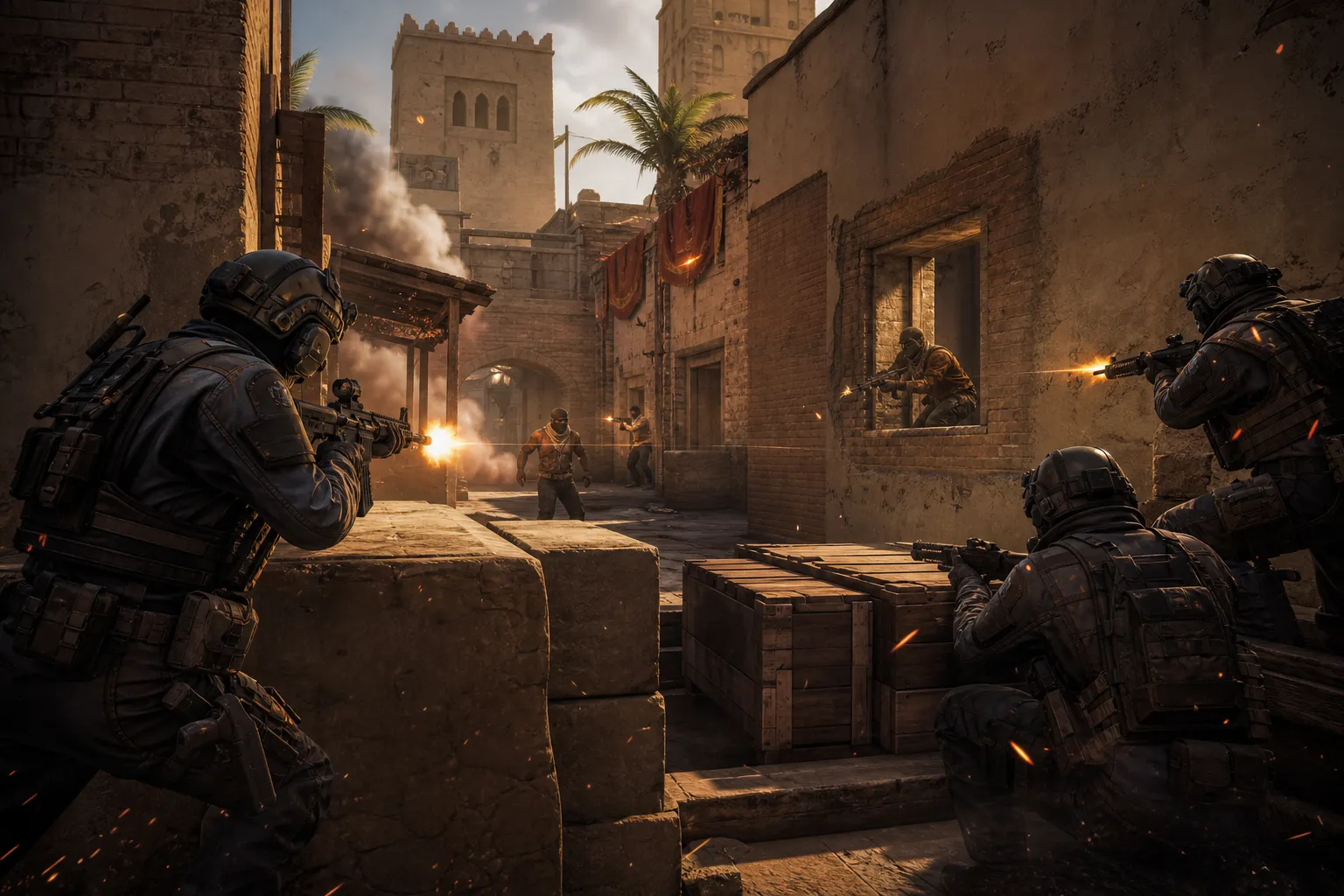
Mirage still feels like the map where one clean mid take can decide whether your round is a masterclass or a total mess. You can have the best A execute in the world, but if your team loses window, cat, and connector control for free, you’re basically asking to get farmed by a 5-man rotate. That’s the whole thing with Mirage in CS2: mid isn’t just a lane, it’s the spine of the map.
Mid on Mirage isn’t optional. It’s the whole script.
On Mirage, mid gives you access to the fastest rotations, the best info, and the nastiest split setups on the board. Source 2 didn’t suddenly invent a new Mirage. It did, though, make every little timing fight feel sharper because subtick rewards cleaner movement and punishes the sloppy stuff you used to get away with on old muscle memory alone. If you’re late to top mid by half a beat, the window smoke already changed the round.
That’s why the best teams still treat mid control like currency. You don’t just “go mid.” You take it, fight for it, and spend it. A good mid round on Mirage lets you pressure connector, peek underpass, threaten catwalk, and force the CTs to make bad choices. Hold mid for 20 seconds and suddenly the defense is stretched thinner than a pug team’s economy after four force-buys.
What real mid control actually looks like
People love talking about A site execs and flashy B splits, but the boring part in the middle is where the round gets built. Proper mid control usually starts with utility and timing, not hero peeks. One flash over top mid, a smoke for window, maybe a connector smoke, and then you’re making the CTs guess where the real pressure is coming from.
The important bit: mid isn’t just about killing someone. If you force a CT off window or connector, that alone can be enough to open the map. A good team might not even take a duel after that. They’ll just freeze, let the CTs burn a molotov, and wait for the defense to show its hand.
The spots that matter most
- Top mid — the first real fight. Win this and the round starts leaning your way.
- Window — if this stays contested, CT rotations get messy fast.
- Connector — the real prize. Whoever owns this controls A pressure and mid splits.
- Catwalk — not as glamorous, but it turns mid control into a real A threat.
- Underpass — sneaky, annoying, and still one of the best timing routes on Mirage.
That list sounds simple until you’re actually in a round and three angles are live at once. Mirage punishes lazy spacing hard. One guy wide-swings top mid without a flash, another is late on window pressure, and suddenly you’re staring at a 3v5 with no map control and no plan.
Why CS2 made mid fights feel even more important
CS2 changed the way a lot of players think about timing, especially with subtick making peeks and counter-strafes feel more exact. No, it didn’t remove the chaos. If anything, it made the clean stuff stand out more. A player who can jiggle top mid, take one clean step into contact, and pop back out without bleeding health is a nightmare now. That’s part of why guys like m0NESY look so sharp in these spaces — the mechanics are obvious, but the discipline behind them is the real killer.
The other thing is utility. Mirage smokes in CS2 can feel a little different depending on the patch and your lineup timing, which means teams that have actual structure around mid get paid. Pugs just toss a window smoke and hope. Good teams chain utility so the CT side can’t fight back with confidence. That’s the difference between a 50/50 and a round you can actually steer.
And yeah, Premier matters here too. In high-CS Rating lobbies, people know the standard Mirage protocols. If you don’t contest mid, you get suffocated. If you overcontest without flash support, you get picked apart. It’s one of the clearest maps in the pool for showing who actually understands pace and who just likes running at heads.
Mid control creates the splits everybody pretends were “the read”
When a team like FaZe or Vitality gets a clean grip on mid, the rest of the map opens like a bad lock. Suddenly A ramp pressure becomes scary because connector is vulnerable. Suddenly B site looks weaker because rotations are delayed. Suddenly a single cat split can force the CTs to defend too many angles at once.
That’s why mid control looks “boring” until you notice how often it decides the big rounds at Majors. Watch enough playoff Mirage and you’ll see the same pattern: one team wins window and connector early, then the whole half tilts. ZywOo doesn’t need to get a crazy 4K every time — his team just gives him more routes to work with. Same with donk. When Spirit start winning the map’s center, the rest of their T side turns into a knife fight the CTs didn’t want.
And honestly, that’s what separates good Mirage teams from the ones that farm frags but lose rounds. A mid win isn’t just map control. It’s timing advantage, economy pressure, and psychological pressure all rolled into one. If the CTs have to keep a player glued to window smoke duty every round, they’re already losing flexibility.
The mid-round decisions are where Mirage gets nasty
Once you own mid, the round becomes about choices. Do you split A through connector and cat? Do you fake the window pressure and hit B late? Do you just walk up short and punish the anchor who’s expecting a contact play? Mirage rewards the team that can answer those questions faster than the other side can reset.
Here’s the ugly truth: most teams don’t actually lose Mirage because their executes are bad. They lose because their mid-round decision-making is flat. They take mid, then do nothing with it. That’s a crime. If you win top mid and don’t convert it into a real threat, you’re basically donating space for free. On a map this timing-heavy, free space is a gift-wrapped loss.
Good teams build the round around a few simple principles:
- Take mid with a flash or two, not with ego.
- Keep connector pressure alive so CT rotates stay nervous.
- Use underpass when the defense is over-rotating.
- Don’t force the hit just because you have control — make the CTs move first.
That last one matters more than people admit. Mirage is full of teams that rush their own advantage. They get window, they get connector, and then they throw it into a stacked site because they got impatient. That’s not “aggressive.” That’s just bad CS.
Why it still holds up against newer maps
Anubis has grown into a serious pick. Ancient has its own ugly charm. Nuke is Nuke — still a tactical tax form disguised as a map. But Mirage keeps hanging around because its mid control lessons transfer everywhere. If you understand Mirage mid, you understand how to attack space, how to bait rotates, and how to force defenders into uncomfortable crossfires on basically any map in the pool.
That’s also why teams still pick it at the top level, even when everyone’s been screaming for a fresher meta. Mirage doesn’t care about hype. It cares whether you can smoke window on time, whether your lurk is synced, and whether your second guy is ready to punish the connector swing. Simple map, brutal execution.
And in CS2, where everyone’s aim feels a little more lethal and every peek can snowball into a round, mid control on Mirage still gives the smartest team the best shot to control the tempo. Not the loudest team. Not the flashiest one. The smartest one.
So when you queue Mirage next, ask yourself one thing before the pistol even ends: are you playing mid like it matters, or are you just hoping nobody on the other side knows how to use it?